Leave Your Message
Enterprise Core Values
Passion,Strive,Pragmatism,Promising
Corporate Vision
To become a global leader in smart energy storage
Corporate mission
Let clean energy enter thousands of households
For decades, diesel generators have been a standard solution for backup and off-grid power. They are proven, widely available, and capable of supplying electricity for long periods when the grid is unavailable.
However, the energy market is changing.
Rising fuel-price volatility, higher electricity costs, stricter emissions requirements, and growing demand for reliable power are encouraging businesses and homeowners to consider a different approach: solar + battery energy storage systems (BESS).
Instead of relying on diesel as the primary backup source, more energy users are combining solar PV, battery storage, hybrid inverters, and smart energy management systems to reduce fuel consumption, lower operating costs, and improve energy resilience.
The important shift is not that diesel generators are disappearing completely. In many critical and long-duration applications, generators still have an important role. The trend is that battery storage is taking over more of the daily energy and short-duration backup functions that diesel generators traditionally performed.
Diesel generators provide dependable power, but their operating model comes with several challenges.
A diesel generator requires continuous fuel.
When oil and fuel prices rise, the cost of generating electricity rises with them. Geopolitical tensions and supply-chain disruptions can also create additional uncertainty for businesses that depend heavily on fuel deliveries.
This is particularly important for remote industrial sites, commercial facilities, telecommunications infrastructure, mines, and regions with unreliable grid power.
Solar PV, by comparison, does not require a continuous fuel supply. Once installed, sunlight can generate electricity without purchasing diesel for every operating hour.
The real cost of a diesel generator is not limited to the initial equipment purchase.
Operators also need to consider:
Battery Energy Storage Systems have fewer moving components and generally require less routine mechanical maintenance.
This makes total cost of ownership (TCO) an increasingly important factor when comparing BESS with diesel generation.
One of the biggest advantages of battery storage is that it can provide value every day, rather than only when the grid fails.
A solar + battery system can:
This changes the economics of the system.
A diesel generator may sit idle most of the time and only operate during outages or peak-demand events.
A battery can participate in the energy system every day.
|
Feature |
Solar + Battery Storage |
Diesel Generator |
|
Energy source |
Solar + stored electricity |
Diesel fuel |
|
Fuel requirement |
No continuous fuel |
Continuous fuel supply |
|
Operating noise |
Very low |
High |
|
Local emissions during operation |
No combustion emissions |
CO₂, NOx and particulate emissions |
|
Routine maintenance |
Relatively low |
Regular engine maintenance |
|
Backup response |
Very fast with properly configured ESS |
Requires generator start-up |
|
Daily energy savings |
Yes |
No |
|
Peak shaving |
Yes |
No |
|
Solar integration |
Native application |
Requires additional integration |
|
EV charging support |
Yes |
Limited |
|
Microgrid integration |
Yes |
Yes |
|
Long-duration backup |
Depends on battery capacity and solar availability |
Strong advantage |
|
Fuel-price exposure |
Low |
High |
The correct choice depends on load profile, outage duration, electricity tariffs, available solar resources, and the required level of resilience.
One of the biggest technical differences between BESS and traditional generators is response time.
A battery energy storage system can respond extremely quickly because it does not need to start an internal combustion engine.
During a grid outage, a properly configured ESS can transition to backup operation in milliseconds or within the specified transfer time of its inverter/backup architecture.
This makes battery storage particularly useful for:
For sensitive loads, fast response can be just as important as total backup duration.
Replacing a diesel generator does not always mean removing the generator.
For many commercial and industrial projects, the more practical solution is a solar + BESS + diesel hybrid microgrid.
The operating strategy can be:
Solar → Battery → Load → Grid → Diesel Generator
During normal conditions:
Solar power supplies the load and charges the battery.
When solar production decreases:
The battery supplies stored energy.
During a short grid outage:
The battery provides immediate backup power.
During a long-duration outage:
The diesel generator can start and operate when additional energy is required.
This strategy allows the diesel generator to remain available for emergencies while significantly reducing unnecessary runtime.
Recent industry discussions increasingly focus on this approach rather than treating BESS and diesel as mutually exclusive technologies.
This is one of the most important questions for project developers and installers.
A battery can replace a diesel generator when:
However, diesel generators can still have an advantage when a facility requires very long-duration backup with high continuous power demand.
For this reason, a hybrid system can sometimes provide the best balance between cost and resilience.
A common mistake is to compare only the purchase price.
A diesel generator may have a lower initial equipment cost, but the long-term calculation needs to include fuel, maintenance, servicing, and replacement costs.
Solar + battery storage usually requires a higher upfront investment, but it can generate value through multiple functions:
Use stored solar energy instead of purchasing electricity from the grid.
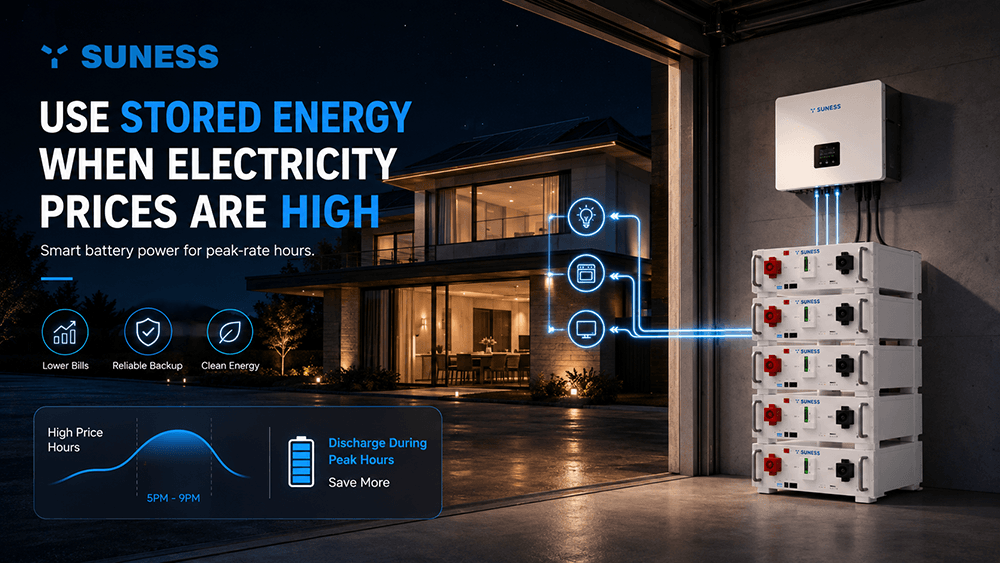
Discharge the battery during periods of high electricity demand or demand charges.
Store energy when electricity is cheaper and use it during higher-cost periods.
Maintain critical loads during grid outages.
Use battery storage before starting or heavily loading the diesel generator.
This is why total cost of ownership (TCO) and return on investment (ROI) are more useful metrics than upfront equipment price alone.
Recent 2026 comparisons increasingly evaluate solar + storage against generators using long-term operating costs rather than purchase price alone.
For modern solar energy storage systems, Lithium Iron Phosphate (LiFePO₄) batteries are widely used because of their combination of safety, cycle life, and stable performance.
Key advantages include:
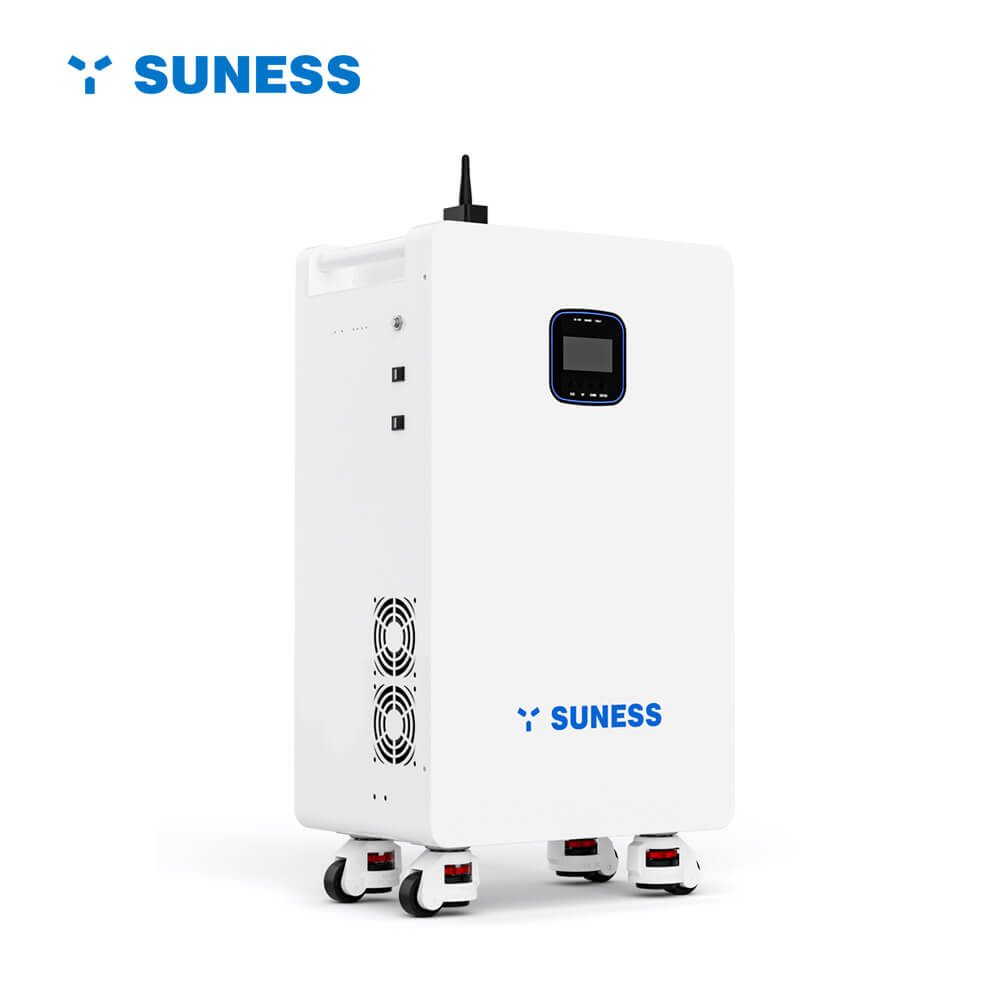
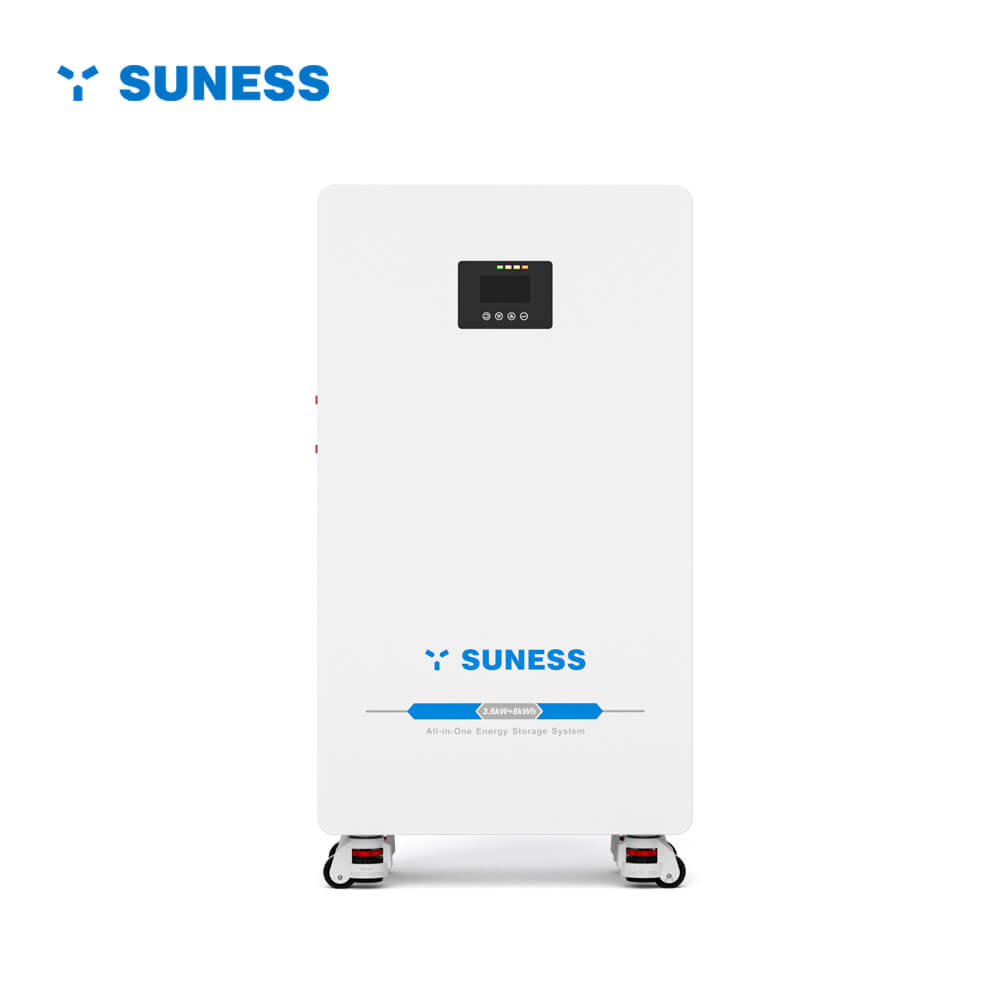
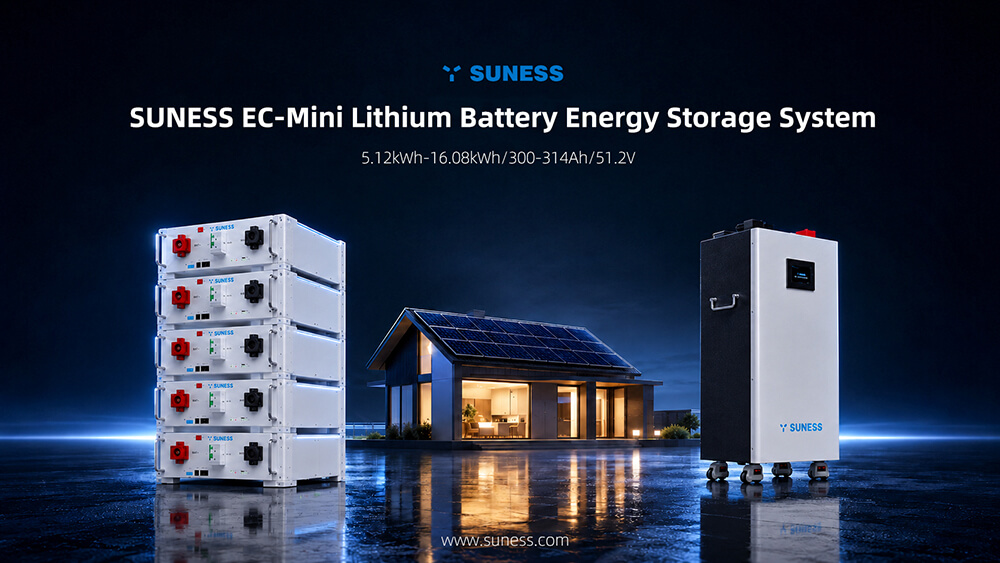
For example, the SUNESS EC-Mini 18.02 uses LiFePO₄ battery technology and supports 95% DOD, 1–16 units in parallel, and ≥8,000 cycles under the specified test conditions.
The system also supports CAN/RS485 communication and compatibility with multiple inverter brands, including Deye, Victron, LuxPower, Growatt, SMA, MUST, SOROTEC, Voltronic and SRNE.
Factories and warehouses can use BESS for:
Mining sites, agricultural facilities, construction sites and remote infrastructure can combine solar, batteries and generators to reduce fuel logistics and generator runtime.
Hotels require reliable electricity for lighting, refrigeration, HVAC, water pumps and other critical loads.
Solar + storage can reduce daytime grid consumption while providing backup power.
Telecom towers require reliable power but may operate in areas with weak or unreliable grids.
Battery storage can reduce generator operating hours and fuel consumption.
Homeowners increasingly use solar batteries to:
Energy security has become an increasingly important consideration in regions affected by geopolitical uncertainty.
Recent events in the Middle East have demonstrated how quickly geopolitical developments can influence energy markets and fuel prices.
For businesses that rely heavily on diesel generators, fuel-price volatility creates additional operating risk.
Solar + battery storage provides an alternative energy strategy:
Generate → Store → Use
Instead of purchasing fuel every time backup generation is required, users can generate electricity locally through solar PV and store it for later use.
This does not eliminate every energy risk, but it can reduce dependence on fuel supply chains and improve energy resilience.
The strongest argument for battery storage is increasingly economic and operational—not only environmental.
Businesses are asking:
Can I reduce my electricity bill?
Can I reduce diesel consumption?
Can I keep critical equipment running during an outage?
Can I reduce peak demand?
Can I stabilize my energy costs?
Can I make better use of my solar power?
Battery storage can address several of these questions with one system.
That is why the market is moving from backup power toward energy management.
Before replacing a diesel generator, installers and project developers should evaluate:
How much power does the facility use during the day and night?
What is the maximum instantaneous power demand?
Does the site require 2 hours, 4 hours, 8 hours, or longer backup?
How much solar energy can realistically be generated each day?
Are there time-of-use rates or demand charges?
How many hours per year does the generator actually operate?
What is the delivered diesel price and how volatile is it?
Which equipment must remain operational during an outage?
These factors determine whether a site should choose solar + BESS, BESS + diesel, or a complete solar + BESS microgrid.
The next stage of energy storage is not simply replacing one generator with one battery.
It is creating an intelligent energy system.
A modern energy management system can coordinate:
Solar PV + Battery + Grid + Diesel Generator + EV Charger + Loads
The system can automatically determine when to:
This makes BESS an active part of the energy infrastructure rather than a passive backup device.
For many applications, solar + battery storage can provide lower operating costs, cleaner operation, faster backup response, and daily energy-saving functions. However, diesel generators can remain valuable for long-duration backup.
Yes, in some applications. The feasibility depends on battery capacity, power demand, outage duration, solar availability, and backup requirements.
It depends on the project. Solar + storage generally has a higher upfront investment, while diesel has ongoing fuel and maintenance costs. A proper comparison should use total cost of ownership rather than equipment price alone.
Yes. A hybrid microgrid can combine solar PV, BESS and diesel generation. The battery can reduce generator runtime and fuel consumption while the generator provides additional long-duration backup when required.
LiFePO₄ batteries offer high safety, long cycle life, stable performance and low maintenance, making them well suited to residential, commercial and industrial energy storage.
There is no universal answer. Backup duration depends primarily on battery capacity in kWh and the site's actual load in kW. For longer outages, solar charging, additional battery capacity, or a hybrid generator may be required.
Leave Your Message
Enterprise Core Values
Passion,Strive,Pragmatism,Promising
Corporate Vision
To become a global leader in smart energy storage
Corporate mission
Let clean energy enter thousands of households