Leave Your Message
Enterprise Core Values
Passion,Strive,Pragmatism,Promising
Corporate Vision
To become a global leader in smart energy storage
Corporate mission
Let clean energy enter thousands of households

As residential and commercial solar energy storage systems become increasingly popular, one question continues to appear among installers, distributors, and system integrators:
Battery and inverter compatibility directly affects system performance, safety, charging efficiency, and long-term reliability. An incompatible system can lead to communication failures, limited battery performance, or even system shutdowns.
This guide explains the most important factors to consider before pairing a LiFePO₄ battery with a hybrid solar inverter.
Why Battery Compatibility Matters
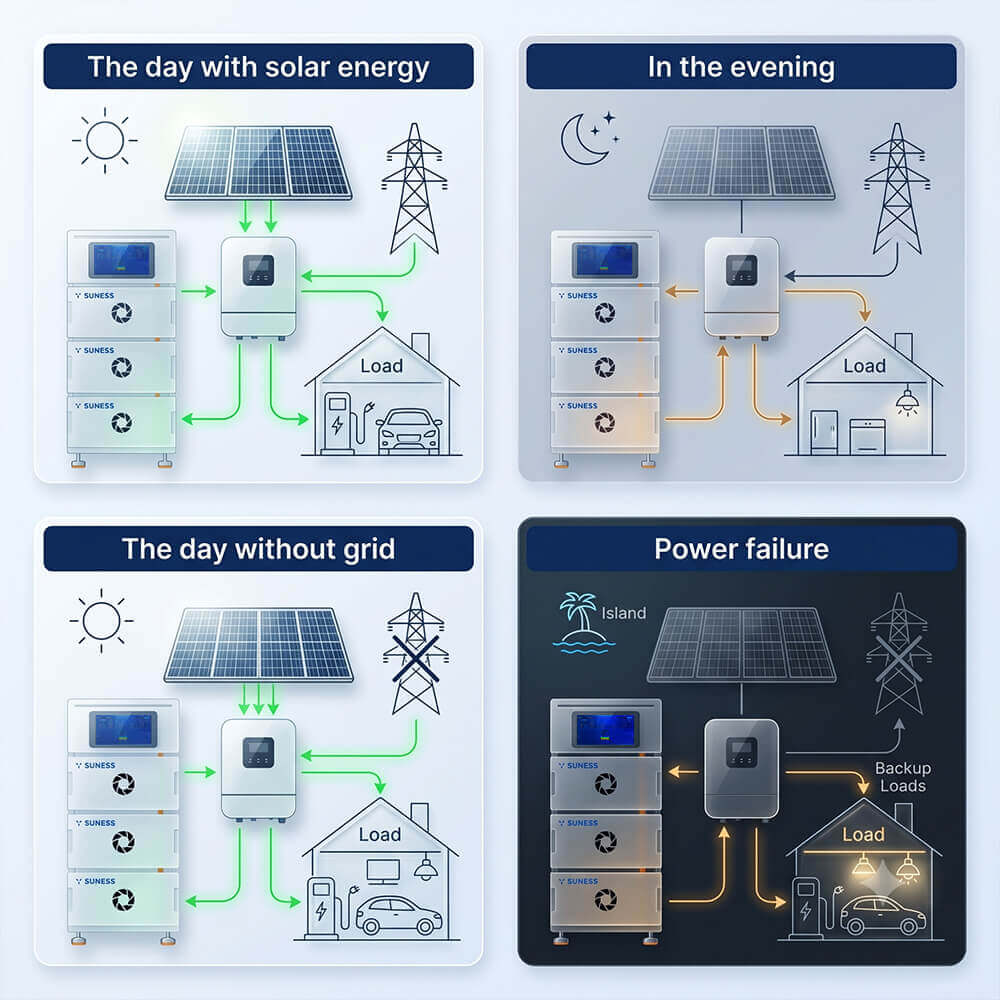
A hybrid inverter is the "brain" of a solar energy storage system. It manages power flow between:
Solar panels、Battery storage、The utility grid、Electrical loads
The battery stores energy, while the inverter controls charging, discharging, and system operation.
If the two devices are not fully compatible, the system may experience:
Communication errors
Charging interruptions
Reduced battery lifespan
Incorrect State of Charge (SOC) readings
Limited inverter functionality
Choosing compatible equipment ensures higher efficiency and stable long-term operation.
The first step is verifying that the battery voltage matches the inverter's supported operating range.
Typical battery categories include:
| Battery Type | Nominal Voltage | Common Applications |
| Low Voltage Battery | 48V / 51.2V | Residential ESS |
| High Voltage Battery | 100V–800V+ | Commercial & Industrial ESS |
Using an incorrect voltage range may prevent the inverter from operating properly or reduce system performance.
Always confirm the inverter's supported battery voltage before installation.
One of the most critical factors is communication between the Battery Management System (BMS) and the hybrid inverter.
A smart BMS exchanges real-time information including:
Battery voltage
Current
Temperature
State of Charge (SOC)
Fault alarms
Charge/discharge limits
Without proper communication, the inverter cannot accurately manage battery charging and protection.
Most modern energy storage systems use one of the following communication interfaces:
CAN Bus
RS485
Both the battery and inverter should support the same communication protocol and compatible software profiles.
Many premium battery manufacturers provide inverter-specific communication protocols for seamless integration.
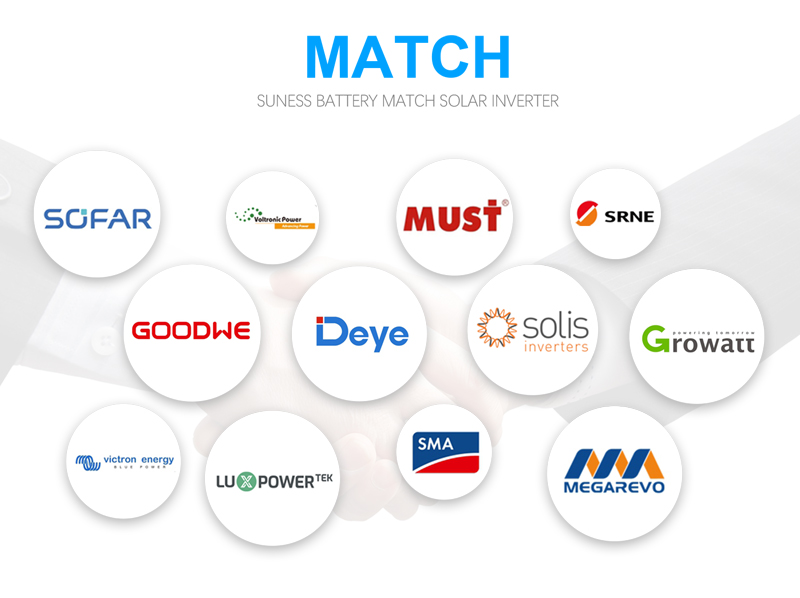
Leading battery manufacturers usually publish a list of compatible inverter brands.
Popular hybrid inverter brands include:
Deye、Growatt、Victron、Solis、Solax、SMA、GoodWe、SRNE、Megarevo、Voltronic
Selecting batteries tested with these inverter brands reduces installation risks and simplifies commissioning.
Battery capacity should be selected based on actual energy consumption rather than simply choosing the largest available battery.
Consider:
Daily electricity usage
Solar generation capacity
Backup time requirements
Future expansion plans
Oversized or undersized battery systems can reduce investment efficiency.
As electricity demand grows, many users choose to expand their battery systems.
Look for batteries that support:
Modular design
Parallel connection
Flexible capacity expansion
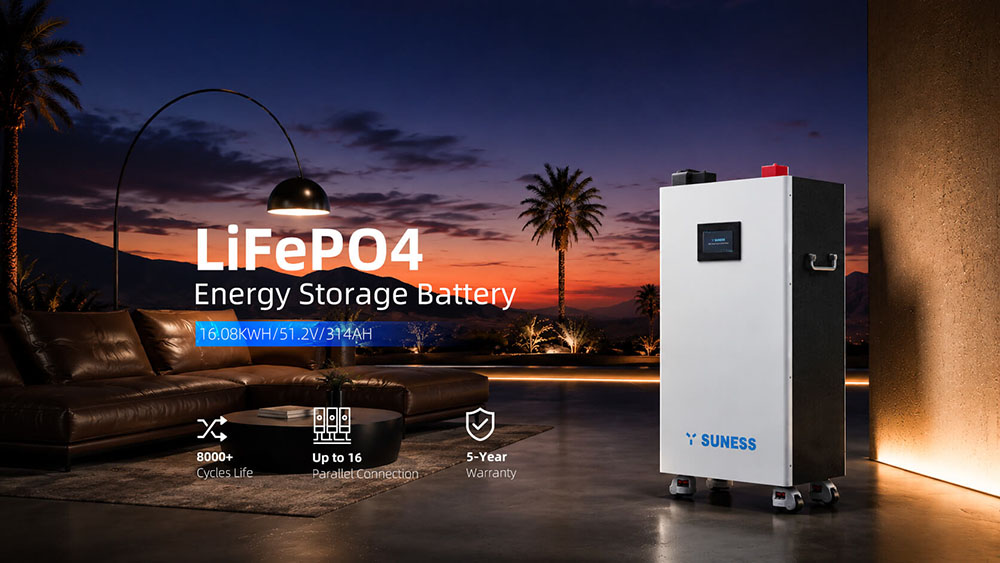
For example, some LiFePO₄ battery systems support up to 16 batteries in parallel, allowing homeowners and businesses to increase storage capacity without replacing the original system.
Safety should never be overlooked.
A high-quality energy storage battery should include:
Intelligent Battery Management System (BMS)
Overcharge protection
Over-discharge protection
Over-current protection
Temperature protection
Short-circuit protection
LiFePO₄ batteries are widely recognized for their excellent thermal stability and high safety performance.
International certifications help ensure product quality and compliance.
Common certifications include:
IEC62619、CE、UN38.3、MSDS、ISO9001
Certified products typically offer higher reliability for residential and commercial energy storage projects.
| Problem | Possible Cause | Solution |
| Battery not detected | Communication protocol mismatch | Check CAN/RS485 settings |
| Charging stops unexpectedly | Incorrect BMS configuration | Update battery parameters |
| SOC display inaccurate | Communication failure | Verify inverter compatibility |
| Limited charging power | Unsupported battery profile | Install compatible firmware |
| System alarms | Voltage mismatch | Confirm battery specifications |
Most modern hybrid inverter systems are designed around LiFePO₄ battery technology because it offers:
Excellent thermal stability
Long cycle life (8,000–10,000+ cycles)
High charging efficiency
Low maintenance requirements
Reliable daily performance
High safety standards
These advantages make LiFePO₄ batteries suitable for residential, commercial, and industrial energy storage applications.
SUNESS designs its energy storage batteries for reliable integration with today's leading hybrid inverter platforms.
Key advantages include:
Intelligent Smart BMS with real-time protection
CAN & RS485 communication
Compatibility with major inverter brands
Support for low-voltage and high-voltage systems
Modular expansion up to 16 battery units
8,000–10,000+ cycle life
Certified to IEC62619, CE, and UN38.3 standards
Whether you're installing a residential solar battery or a commercial energy storage system, SUNESS solutions provide dependable performance and simplified system integration.
No. The battery must match the inverter's voltage, communication protocol, and supported battery profile.
Which communication protocol is better, CAN or RS485?
Both are widely used. CAN generally provides faster and more comprehensive communication, while RS485 remains a reliable and cost-effective option. Compatibility depends on the inverter manufacturer.
Why isn't my battery communicating with the inverter?
Common causes include incompatible communication protocols, incorrect firmware, unsupported battery profiles, or wiring issues.
Which battery chemistry is best for hybrid inverters?
LiFePO₄ batteries are the preferred choice due to their safety, long lifespan, stable performance, and compatibility with most modern hybrid inverter systems.
Conclusion
Ensuring battery compatibility with a hybrid inverter is essential for building a safe, efficient, and reliable solar energy storage system. By verifying voltage compatibility, BMS communication, CAN/RS485 protocols, battery capacity, safety features, and certified inverter compatibility, installers and system owners can avoid common integration issues and maximize long-term system performance.
As the global demand for solar energy storage continues to grow, choosing a battery that integrates seamlessly with leading hybrid inverters is no longer just a technical preference—it's a key factor in achieving reliable, future-ready energy solutions.
Leave Your Message
Enterprise Core Values
Passion,Strive,Pragmatism,Promising
Corporate Vision
To become a global leader in smart energy storage
Corporate mission
Let clean energy enter thousands of households