FR
FR
 ES
ES
 AR
AR
 PT
PT
 TL
TL
 MY
MY
Leave Your Message
Enterprise Core Values
Passion,Strive,Pragmatism,Promising
Corporate Vision
To become a global leader in smart energy storage
Corporate mission
Let clean energy enter thousands of households

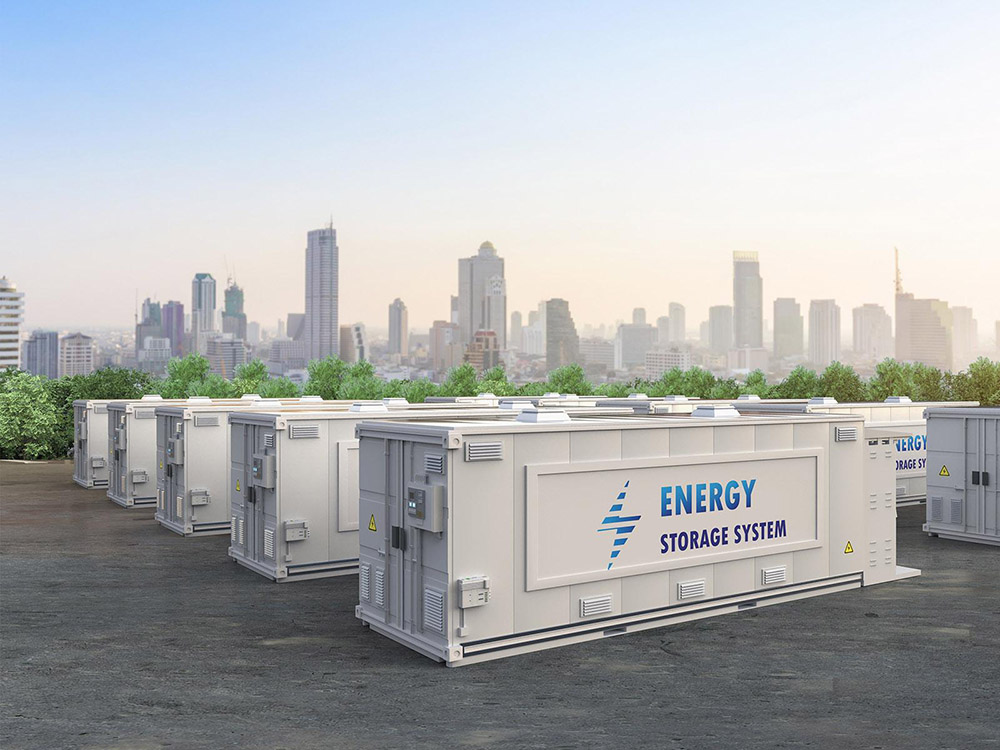
As solar power adoption increases worldwide, Community Energy Storage (CES) is emerging as a practical solution to manage distributed energy efficiently. Instead of each household installing its own battery, a shared energy storage system is deployed within a community and connected to multiple homes or small businesses.
What Is Community Energy Storage?
Community Energy Storage refers to a shared battery system installed at the neighborhood or community level that stores electricity generated from solar panels or the grid.
The stored energy can then be distributed to multiple households or facilities according to predefined rules, usage monitoring, or energy-sharing agreements.
Typical CES capacities range from 100 kWh to several MWh, depending on the number of participating users and local energy demand.
Key characteristics include:
Shared energy infrastructure
Centralized battery management
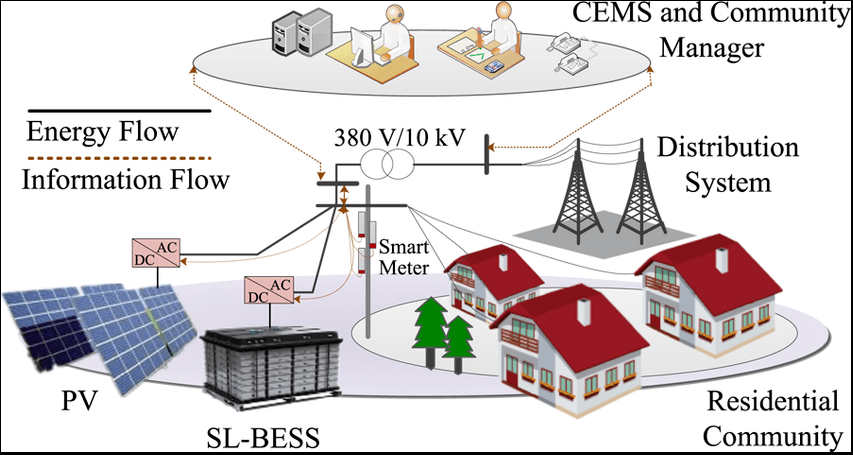
Smart energy allocation through EMS platforms
Lower upfront cost per household
Four Main Cost-Sharing Models for Community Energy Storage
In most CES projects, the capital cost of solar panels and battery storage is distributed among stakeholders. The following four models are commonly used worldwide.
1. Utility-Owned Model
In this structure, the power utility or grid operator invests in the energy storage system.
How it works:
The utility installs the battery within the community.
Residents pay electricity tariffs as usual.
The battery helps stabilize the grid and manage peak loads.
Advantages
No upfront cost for residents
Grid stability improvements
Utilities gain peak-shaving capabilities
Typical regions
United States/Australia/Europe
2. Community Cooperative Model
Here, residents jointly invest in the energy storage system.
Each household contributes a portion of the project cost and receives a share of the stored electricity.
How electricity is allocated
Allocation can be based on:
Equal shares per household
Investment proportion
Measured consumption through smart meters
Advantages
Shared investment lowers individual costs
Residents benefit from lower electricity prices
Strong community participation
3. Third-Party Investor Model
In this model, a private company or energy service provider (ESCO) funds the solar + storage system.
Residents do not buy the system directly but pay for the energy service.
Typical payment structures:
Energy subscription
Power purchase agreements (PPA)
Monthly service fee
Advantages
Zero or low upfront cost for residents
Professional system operation
Scalable business model
This model is widely used in Southeast Asia, Africa, and the Middle East.
4. Government-Supported Model
Some CES projects are funded through government incentives or public-private partnerships.
Government programs may include:
Installation subsidies
Tax credits
Community renewable energy grants
Advantages
Accelerates renewable energy adoption
Reduces financial burden for communities
Supports rural electrification programs
Key Advantages of Community Energy Storage
1. Lower Cost Compared to Individual Batteries
Installing one shared battery system is typically more economical than installing separate batteries for every household.
Benefits include:
Reduced installation cost
Shared maintenance expenses
Higher system efficiency
2. Improved Grid Stability
Community batteries can provide:
Peak shaving
Frequency regulation
Voltage stabilization
This helps utilities manage the growing penetration of solar energy.
3. Higher Solar Energy Utilization
Without storage, excess solar power during the day may be wasted or exported to the grid at low prices.
CES systems allow communities to:
Store daytime solar energy
Use it during evening peak demand
Reduce reliance on grid electricity
4. Ideal for Emerging Energy Markets
Community storage works particularly well in regions with:
Frequent power outages
High diesel generator dependence
Growing solar installations
This makes CES attractive in markets such as:
Southeast Asia/Middle East/Africa
How Electricity Is Calculated for Each Household
One common question is: How is electricity usage distributed among residents?
Three main methods are used.
Smart Meter Allocation
Each household has a smart meter connected to the energy management system (EMS).
The system tracks electricity consumption and assigns battery usage accordingly.
Subscription-Based Energy Access
Residents pay a fixed monthly fee to access a certain amount of stored energy.
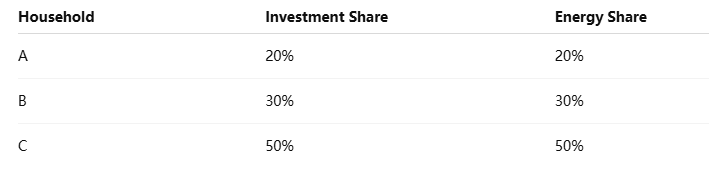
Proportional Investment Model
Energy usage rights are allocated based on investment proportion.
For example:
Household Investment Share Energy Share
Opportunities for Solar Installers and Distributors
Community energy storage represents a major growth opportunity for solar installers, EPC companies, and battery distributors.
1. Focus on Small Commercial Communities
Promising locations include:
Residential compounds
Industrial parks
Agricultural cooperatives
Tourist resorts
These sites often share energy infrastructure.
2. Package “Solar + Storage + EMS” Solutions
Instead of selling only batteries, installers should offer complete energy solutions including:
Solar panels
Battery storage systems
Hybrid inverters
Energy management systems
This creates higher project value.
3. Develop Long-Term Energy Service Models
Installers can evolve into energy service providers, earning recurring revenue through:
Energy subscription plans
O&M services
Remote monitoring platforms
4. Choose Scalable Battery Systems
Community projects require expandable storage capacity.
Modular battery systems allow projects to grow from:
100 kWh pilot systems
to
multi-MWh community storage.
Reliable LiFePO₄ battery platforms with long cycle life and advanced BMS technology are ideal for these deployments.
The Future of Community Energy Storage
As solar installations continue to expand globally, Community Energy Storage will play a critical role in distributed energy systems.
For installers and energy companies, CES offers a new project model that combines:
renewable energy
smart energy management
shared infrastructure economics
Companies that understand this model early will gain a significant advantage in emerging energy markets.
This model is widely used in Southeast Asia, Africa, and the Middle East.
Leave Your Message
Enterprise Core Values
Passion,Strive,Pragmatism,Promising
Corporate Vision
To become a global leader in smart energy storage
Corporate mission
Let clean energy enter thousands of households