
Leave Your Message
Enterprise Core Values
Passion,Strive,Pragmatism,Promising
Corporate Vision
To become a global leader in smart energy storage
Corporate mission
Let clean energy enter thousands of households
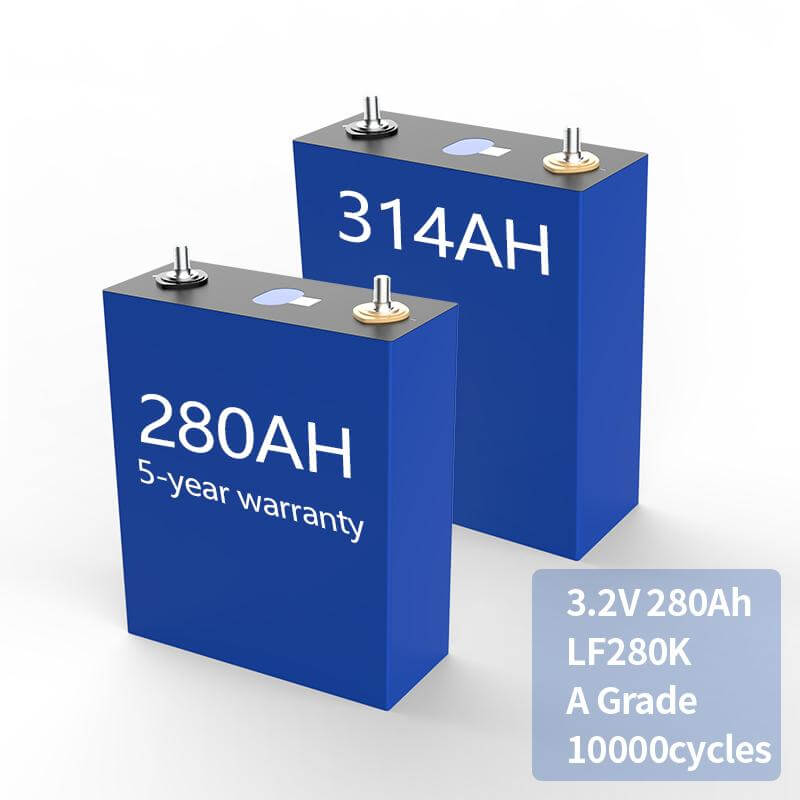
Choosing the right battery cell is a critical decision when designing an energy storage system (ESS). Among the commonly used lithium iron phosphate (LiFePO4) prismatic cells, 280Ah and 314Ah models are popular choices for residential, commercial, and industrial energy storage applications.
But which one offers better performance and value?
A 314Ah battery cell provides approximately 12% more nominal energy than a 280Ah cell at the same nominal voltage. This can help increase system capacity without necessarily increasing the number of cells or the overall enclosure size.
However, a higher capacity does not automatically mean better performance or lower system costs. Factors such as cell price, charging and discharging rates, cycle life, system compatibility, installation requirements, and long-term operating costs all matter.
In this guide, we compare 314Ah and 280Ah LiFePO4 battery cells from multiple perspectives to help battery manufacturers, ESS integrators, distributors, and project developers choose the right solution.
The primary difference between 314Ah and 280Ah battery cells is their rated capacity.
Assuming both cells have a nominal voltage of 3.2V, their theoretical nominal energy is:
280Ah × 3.2V = 896Wh
314Ah × 3.2V = 1,004.8Wh
This means a 314Ah cell provides approximately 12.1% more nominal energy than a 280Ah cell.
| Specification | 280Ah LiFePO4 Cell | 314Ah LiFePO4 Cell |
|---|---|---|
| Battery chemistry | LiFePO4 | LiFePO4 |
| Nominal capacity | 280Ah | 314Ah |
| Nominal voltage | 3.2V | 3.2V |
| Nominal energy | 896Wh | 1,004.8Wh |
| Voltage range | Model-dependent | Model-dependent |
| Charge/discharge rate | Manufacturer-specific | Manufacturer-specific |
| Cycle life | Manufacturer-specific | Manufacturer-specific |
| Dimensions | Model-dependent | Model-dependent |
| Weight | Model-dependent | Model-dependent |
| Typical applications | Residential, C&I, utility ESS | Residential, C&I, utility ESS |
Note: The energy values above are calculated using a nominal voltage of 3.2V. Other specifications vary by manufacturer and cell model. Always refer to the actual product datasheet.
The difference between 314Ah and 280Ah is 34Ah per cell.
For a battery pack with 16 cells connected in series (16S), the nominal system voltage remains 51.2V.
| Parameter | 16S 280Ah Battery | 16S 314Ah Battery |
|---|---|---|
| Nominal voltage | 51.2V | 51.2V |
| Battery capacity | 280Ah | 314Ah |
| Nominal energy | 14.34kWh | 16.08kWh |
| Energy capacity difference | — | +1.74kWh |
| Relative capacity increase | — | Approximately 12.1% |
A 16S battery configuration using 314Ah cells can provide approximately 16.08kWh, compared with 14.34kWh using 280Ah cells.
For manufacturers designing residential batteries or commercial energy storage cabinets, this additional capacity may help increase energy density and improve the utilization of available installation space.
Cost performance is one of the most important considerations when selecting battery cells for energy storage systems.
At first glance, a 280Ah cell may appear more affordable because its individual purchase price can be lower. However, comparing battery prices based only on the cost per cell can lead to an inaccurate conclusion.
A better approach is to compare the cost per kWh.
The basic calculation is:
Cost per kWh = Cell Purchase Price ÷ Nominal Energy (kWh)
For example, assume the following illustrative purchase prices:
| Parameter | 280Ah Cell | 314Ah Cell |
|---|---|---|
| Nominal energy | 0.896kWh | 1.0048kWh |
| Example unit price | $45 | $50 |
| Cost per nominal kWh | $50.22 | $49.76 |
In this example, although the 314Ah cell costs more per unit, its cost per nominal kWh is slightly lower.
This demonstrates why battery buyers should evaluate energy capacity relative to purchase price rather than simply choosing the cell with the lowest unit cost.
A 314Ah cell can offer better cell-level cost performance when its additional purchase price is proportionally lower than its additional energy capacity.
Based on the nominal energy difference, the 314Ah cell provides approximately 12.1% more energy than the 280Ah cell.
Therefore, if the 314Ah cell costs less than approximately 12.1% more than the 280Ah cell, its nominal energy cost per kWh will be lower.
A 280Ah cell may be the more economical choice when:
Its purchase price is significantly lower.
Existing production lines are already designed around 280Ah cells.
The system does not require additional battery capacity.
Existing BMS and battery modules are optimized for 280Ah cells.
The project prioritizes proven supply arrangements and compatibility.
For large-scale ESS procurement, even a small difference in cell pricing can have a significant impact on total project costs.
Our recommendation: Compare the cost per usable kWh, not just the purchase price per cell. Also consider BMS, enclosure, certification, installation, warranty, and replacement costs.
Higher battery capacity does not automatically mean higher power performance.
Both 280Ah and 314Ah LiFePO4 cells can be suitable for energy storage applications, but their actual performance depends on their internal design and manufacturer specifications.
A 314Ah cell stores approximately 12.1% more nominal energy than a 280Ah cell at the same nominal voltage.
This can be beneficial for:
Residential energy storage batteries.
Commercial and industrial ESS cabinets.
Containerized energy storage systems.
Solar battery storage applications.
Large-capacity battery modules.
Charging and discharging rates determine how quickly a battery cell can accept or deliver energy.
For example, at a nominal 0.5C rate:
| Parameter | 280Ah Cell | 314Ah Cell |
|---|---|---|
| Capacity | 280Ah | 314Ah |
| Current at 0.5C | 140A | 157A |
| Nominal voltage | 3.2V | 3.2V |
| Approximate power at 0.5C | 448W | 502.4W |
These values are calculated from nominal capacity and voltage, assuming the cell is rated for continuous operation at 0.5C.
However, a cell with a higher nominal capacity does not necessarily support a higher C-rate.
For example, some 280Ah cells support higher maximum charging or discharging rates than certain 314Ah models. This can make a 280Ah cell more suitable for applications requiring higher power output.
Before selecting a cell, check:
Standard charging current.
Maximum continuous charging current.
Standard discharging current.
Maximum continuous discharging current.
Peak discharge current and duration.
Operating temperature range.
The correct choice depends on whether your energy storage project prioritizes energy capacity or power output.
Cycle life is another important factor when evaluating the long-term value of battery cells.
LiFePO4 batteries are widely used in energy storage systems because of their cycle-life characteristics and thermal stability.
However, it is incorrect to assume that every 314Ah cell lasts longer than every 280Ah cell.
Actual cycle life depends on several factors:
Battery cell design and manufacturing quality.
Charging and discharging rates.
Depth of discharge (DoD).
Operating temperature.
Charging voltage and current.
Battery management system settings.
End-of-life (EOL) capacity threshold.
Two battery cells may both be advertised as having 8,000 cycles, but their test conditions may be different.
For example:
One manufacturer may specify 8,000 cycles at 25°C and 70% remaining capacity.
Another may specify 8,000 cycles at 25°C and 80% remaining capacity.
These specifications are not directly equivalent.
A higher remaining-capacity threshold indicates a more demanding end-of-life criterion.
When comparing battery suppliers, request the complete cycle-life test conditions rather than relying only on the advertised cycle count.
Both 280Ah and 314Ah cells can be suitable for long-term ESS applications when properly designed and operated.
For project developers, the more important question is how much usable energy the battery can deliver over its operating life relative to its total investment.
A cell with a slightly lower purchase price but a shorter service life may result in higher long-term energy costs.
Compatibility is one of the most important considerations when upgrading an existing energy storage system.
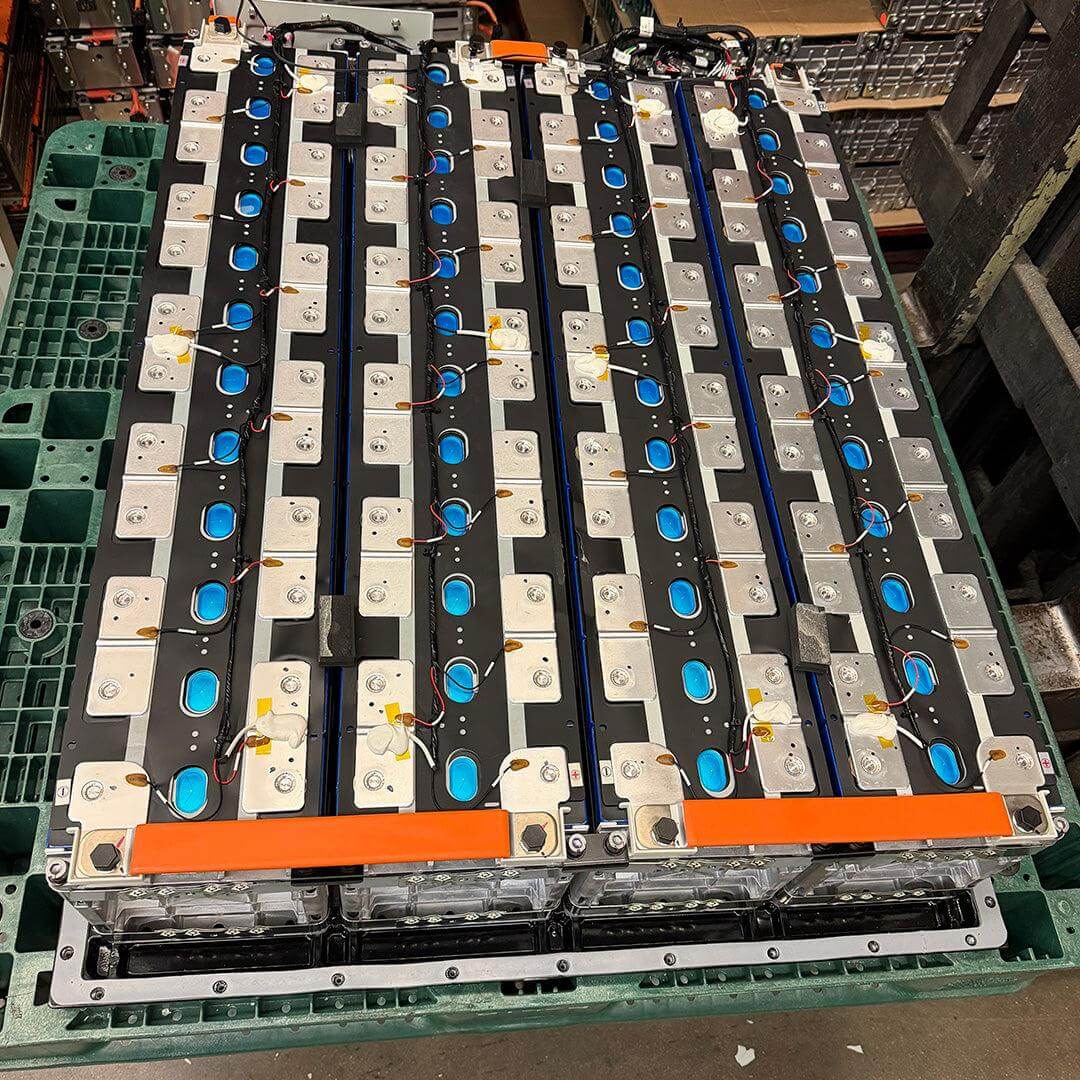
Some 314Ah and 280Ah prismatic cells share similar physical dimensions, which may make them candidates for certain module redesigns or capacity upgrades.
However, similar dimensions do not guarantee complete compatibility.
Before replacing 280Ah cells with 314Ah cells, check the following:
Compare the cell length, width, height, terminal position, and mounting requirements.
Even small dimensional differences can affect:
Module spacing.
Busbar connections.
Compression structures.
Cooling arrangements.
Battery enclosure design.
Confirm that the nominal voltage, operating voltage range, internal resistance, charging current, and discharging current meet the system requirements.
The Battery Management System must be configured for the selected cell capacity and electrical characteristics.
Important parameters include:
Cell voltage protection limits.
Overcharge and over-discharge protection.
Temperature protection.
Current limits.
State of Charge (SOC) estimation.
Cell balancing settings.
Replacing the original battery cells may affect the certification status of the complete battery system.
Depending on the product and target market, additional testing or documentation updates may be required.
Relevant standards and requirements may include IEC 62619, UL 1973, UL 9540A, and UN 38.3, where applicable.
Important: Do not assume that a 314Ah cell is a direct drop-in replacement for a 280Ah cell. Obtain manufacturer approval and complete the necessary electrical, mechanical, BMS, and compliance assessments before making any changes.
Different energy storage applications have different requirements.
The best battery cell depends on the system's energy capacity, power output, installation environment, and overall design.
For residential ESS applications, 314Ah cells may offer an advantage when manufacturers want to increase battery capacity without significantly increasing the number of cells.
Potential benefits include:
Higher energy capacity per cell.
More energy in a similar module footprint, where dimensions are compatible.
Greater flexibility in designing larger residential batteries.
Potentially lower cell count for a given energy target.
However, 280Ah cells can remain a practical choice for residential products with established designs and existing production compatibility.
For C&I energy storage cabinets, capacity, power output, thermal management, and system integration are all important.
314Ah cells may be attractive for projects that prioritize:
Higher energy capacity per battery module.
Better utilization of cabinet space.
Reduced cell count for a given energy target.
Higher energy density at the system level, subject to the complete design.
280Ah cells may be more suitable when:
Existing battery cabinets are designed around 280Ah cells.
The system requires specific charging or discharging rates.
Existing certification and production processes are already established.
Procurement pricing and supply availability are more favorable.
For large-scale BESS projects, even small differences in cell performance and pricing can have a significant effect on total project economics.
Project developers should evaluate:
Total installed cost per kWh.
Usable energy capacity.
Power-to-energy ratio.
Round-trip efficiency.
Cycle life and degradation.
Thermal management requirements.
Maintenance and replacement costs.
Long-term supply agreements.
The best cell is the one that meets the project's technical requirements while delivering the lowest overall cost over its operating life.
Integration efficiency is an important consideration for battery manufacturers and ESS system integrators.
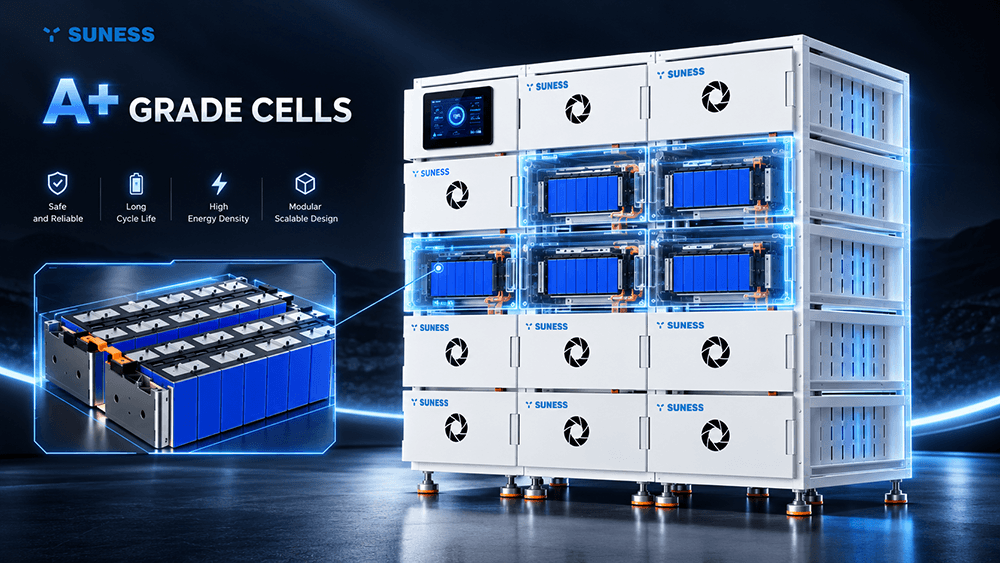
A battery cell's dimensions, terminal design, electrical characteristics, and BMS communication requirements can directly affect product development and manufacturing costs.
If a 314Ah cell has dimensions and terminal arrangements similar to an existing 280Ah design, manufacturers may be able to adapt some mechanical components.
Potential advantages include:
Less modification to existing module structures.
More energy capacity within a similar physical footprint.
Potentially improved production efficiency.
Reduced cell count for certain system capacity targets.
However, changes to cell capacity and electrical characteristics may still require updates to the BMS, protection settings, system validation, and product certification.
For this reason, battery manufacturers should evaluate the complete system rather than comparing cell dimensions alone.
The following comparison can help battery manufacturers, ESS integrators, and project developers make a more informed decision.
| Selection Factor | 280Ah Cell | 314Ah Cell |
|---|---|---|
| Nominal energy per cell | Lower | Higher |
| Energy density | Model-dependent | Model-dependent |
| Individual cell price | May be lower | May be higher |
| Cost per kWh | Depends on price and specifications | Depends on price and specifications |
| Power performance | Depends on C-rate | Depends on C-rate |
| Cycle life | Manufacturer-dependent | Manufacturer-dependent |
| Existing system compatibility | Suitable for established 280Ah designs | Requires compatibility verification |
| Module design flexibility | Depends on existing design | Potential capacity advantage |
| Procurement suitability | Depends on market availability | Depends on market availability |
Your existing ESS design is optimized for 280Ah cells.
You can obtain competitive procurement prices.
Your application requires a higher charging or discharging rate supported by the selected model.
Your production line and certification are already established.
Your project does not require additional capacity per cell.
You want higher nominal energy per cell.
Your battery module can accommodate the selected cell dimensions.
You want to increase system capacity within a similar footprint.
The cell's power rating matches your inverter and application requirements.
The cost per usable kWh is competitive.
Your BMS and certification requirements can support the new cell model.
Our recommendation: For new ESS designs, 314Ah cells are worth evaluating because of their higher nominal energy capacity. However, 280Ah cells can still provide excellent value when their pricing, power performance, supply availability, and existing system compatibility better match the project requirements.
The main difference is nominal capacity. At 3.2V, a 314Ah cell provides approximately 1,004.8Wh, while a 280Ah cell provides approximately 896Wh. This gives the 314Ah cell around 12.1% more nominal energy.
Not necessarily. A 314Ah cell offers more nominal energy per cell, but the better choice depends on purchase price, charging and discharging rates, cycle life, system compatibility, and application requirements.
The individual purchase price of a 314Ah cell may be higher, but the cost per kWh can be lower if its price premium is proportionally smaller than its additional energy capacity. Always compare actual supplier quotations and datasheets.
Not automatically. Even when physical dimensions are similar, differences in capacity, voltage characteristics, internal resistance, current limits, and BMS requirements must be evaluated. System validation and certification updates may also be necessary.
Assuming a nominal cell voltage of 3.2V, a 16S 314Ah battery has a nominal voltage of 51.2V and a nominal energy capacity of approximately 16.08kWh.
Cycle life varies by manufacturer and model. It depends on charging and discharging rates, operating temperature, depth of discharge, and end-of-life criteria. Always compare cycle-life figures under equivalent test conditions.
Mixing different-capacity cells in the same series string is generally not recommended unless the battery manufacturer has specifically designed and validated the configuration. Differences in capacity and electrical characteristics can cause imbalance and reduce system reliability.
Both can be suitable. A 314Ah cell may be attractive for higher energy capacity and module-density requirements, while a 280Ah cell may be more suitable for existing system designs or projects requiring specific power characteristics. The final choice should be based on the complete ESS design.
Both 280Ah and 314Ah LiFePO4 battery cells play important roles in modern energy storage systems.
A 314Ah cell offers approximately 12.1% more nominal energy than a 280Ah cell at the same nominal voltage. This can help manufacturers increase battery capacity and improve energy utilization within a similar module footprint, where the cell dimensions are compatible.
On the other hand, 280Ah cells remain a practical solution for projects that prioritize established system designs, competitive procurement costs, and specific power requirements.
When selecting battery cells for residential, commercial, or utility-scale energy storage systems, consider more than nominal capacity. Evaluate cost per usable kWh, cycle life, charging and discharging performance, system compatibility, safety, certification, and long-term supply reliability.
The best battery cell is not simply the one with the highest Ah rating. It is the one that delivers the right balance of performance, cost, compatibility, and long-term value for your energy storage project.
SUNESS provides LiFePO4 battery and energy storage solutions for residential, commercial, and industrial applications.
Whether you are developing a new ESS project, sourcing battery cells, or expanding your energy storage product portfolio, our team can help you explore suitable battery configurations and system solutions.
Contact SUNESS to discuss your energy storage requirements.
Website: https://www.suness.com/
Email: info.CN@youess.com
Leave Your Message
Enterprise Core Values
Passion,Strive,Pragmatism,Promising
Corporate Vision
To become a global leader in smart energy storage
Corporate mission
Let clean energy enter thousands of households