

Leave Your Message
Enterprise Core Values
Passion,Strive,Pragmatism,Promising
Corporate Vision
To become a global leader in smart energy storage
Corporate mission
Let clean energy enter thousands of households
Choosing the right home battery capacity is one of the most important decisions when installing a residential energy storage system. A 10kWh battery may be sufficient for a household with moderate electricity consumption, while a 15kWh battery can provide longer backup time, greater solar energy storage capacity, and more flexibility for homes with higher energy demands.
But is a 15kWh home battery always better than a 10kWh model?
The answer depends on your household electricity consumption, solar panel capacity, backup requirements, installation space, and budget. The best battery is not necessarily the largest one. It is the one that matches your actual energy needs and provides the best balance between system cost and usable energy.
In this guide, we compare 10kWh and 15kWh home battery systems to help homeowners, solar installers, and energy storage buyers make an informed decision.
The main difference between a 10kWh and a 15kWh home battery is its energy storage capacity.
A 15kWh battery provides 50% more nominal energy storage than a 10kWh battery. This additional capacity can support longer backup periods, store more excess solar electricity, and accommodate households with higher electricity consumption.
| Comparison | 10kWh Home Battery | 15kWh Home Battery |
|---|---|---|
| Nominal capacity | 10kWh | 15kWh |
| Energy storage | Moderate | Higher |
| Backup duration | Shorter | Longer |
| Solar energy storage | Suitable for moderate demand | Suitable for higher demand |
| Household electricity consumption | Low to moderate | Moderate to high |
| Installation space | Generally smaller | Generally larger |
| Initial investment | Usually lower | Usually higher |
| Expansion potential | Depends on system design | Depends on system design |
Note: Actual usable energy, backup duration, dimensions, and costs depend on the battery model, inverter configuration, installation conditions, and operating settings.
Under the same operating conditions, a 15kWh battery can store approximately 50% more nominal energy than a 10kWh battery.
For example, assuming the household consumes an average of 1kW while operating on battery power:
10kWh battery: approximately 10 hours of theoretical runtime.
15kWh battery: approximately 15 hours of theoretical runtime.
These are simplified calculations based on nominal capacity. Actual runtime will be lower depending on usable capacity, inverter efficiency, reserve settings, and battery operating conditions.
The key point is that battery capacity determines how long a system can supply energy, while inverter output power determines how many appliances can operate simultaneously.
Before choosing between a 10kWh and 15kWh battery, review your household electricity consumption.
Your monthly electricity bill is a useful starting point. Divide your monthly electricity consumption by the number of days in the billing period to estimate your average daily energy use.
For example:
300kWh per month ÷ 30 days = 10kWh per day.
450kWh per month ÷ 30 days = 15kWh per day.
600kWh per month ÷ 30 days = 20kWh per day.
However, daily electricity consumption alone does not determine the correct battery size. You should also consider when electricity is used, how much solar energy is available during the day, and which appliances need backup power.
A 10kWh home battery can be a practical option for households that:
Have moderate daily electricity consumption.
Use solar panels to cover daytime electricity demand.
Want to store excess solar energy for evening use.
Need backup power for essential household appliances.
Have limited installation space or a tighter budget.
A 10kWh system may be suitable for a smaller household or a home that does not rely heavily on electricity-intensive appliances.
A 15kWh home battery may be a better choice for households that:
Consume more electricity throughout the day.
Have larger solar panel installations.
Use air conditioning or other high-energy appliances regularly.
Want longer backup coverage during power outages.
Plan to add electric appliances or increase household energy consumption.
Want to store more daytime solar generation for nighttime use.
A larger battery can provide greater flexibility, especially when household demand increases during the evening or when grid electricity is expensive.
The number of appliances a battery can support depends on their power ratings, operating hours, and simultaneous electricity demand.
Here is an illustrative household appliance consumption table:
| Household Appliance | Approximate Power | Example Daily Usage | Daily Energy |
|---|---|---|---|
| Refrigerator | 150W average | 10 hours | 1.5kWh |
| LED lighting | 100W | 6 hours | 0.6kWh |
| Wi-Fi router | 15W | 24 hours | 0.36kWh |
| Television | 100W | 5 hours | 0.5kWh |
| Laptop and electronics | 100W | 5 hours | 0.5kWh |
| Washing machine | 500W average | 1 hour | 0.5kWh |
| Air conditioner | 1,000W average | 5 hours | 5kWh |
| Microwave | 1,200W | 0.25 hours | 0.3kWh |
| Total | 9.26kWh |
These figures are illustrative planning assumptions, not fixed appliance specifications. Actual electricity consumption varies by model, efficiency, operating conditions, and usage patterns.
A 10kWh battery may cover a combination of:
Refrigerators and freezers
LED lighting
Wi-Fi routers and communication devices
TVs and computers
Phone and laptop charging
Selected kitchen appliances
Limited air conditioning usage
For households that prioritize essential backup loads rather than operating every appliance, 10kWh can provide a useful level of energy independence.
A 15kWh battery provides additional energy for households that want to operate more appliances or extend backup coverage.
Depending on the inverter and system configuration, it may support:
Essential household appliances for longer periods
Refrigeration and lighting
Computers, TVs, and networking equipment
Washing machines and other household appliances
Longer periods of air conditioning usage
A larger selection of backup circuits
However, a larger battery does not automatically mean that every appliance can run simultaneously. The inverter's continuous output power and surge capability must also be sufficient for the connected loads.
Important: Air conditioners, electric water heaters, electric ovens, and EV chargers can significantly increase electricity demand. Check both their energy consumption (kWh) and power requirements (kW) before selecting a battery.
Your solar panel capacity is another important factor when choosing between a 10kWh and 15kWh battery.
A solar battery stores surplus electricity generated by solar panels during the day and supplies it when solar generation is insufficient, such as during the evening or at night.
The relationship between solar panel capacity and battery capacity should be evaluated based on actual energy generation and household consumption.
The following combinations are illustrative starting points for residential system planning:
| Solar Panel Capacity | Possible Battery Capacity | Typical Application |
|---|---|---|
| 3–5kW | 5–10kWh | Smaller homes and essential backup |
| 5–8kW | 10kWh | Moderate household consumption |
| 7–12kW | 10–15kWh | Higher consumption and extended backup |
| 10kW+ | 15kWh or more | Larger homes and higher energy demand |
These are not fixed engineering requirements. Actual system sizing depends on local solar irradiance, roof orientation, shading, seasonal generation, inverter specifications, and household load profiles.
A 10kWh battery may be sufficient if:
Your solar system generates enough electricity to cover daytime consumption and recharge the battery.
Your evening and nighttime electricity demand is moderate.
You mainly want to increase solar self-consumption.
Your household does not require extended backup coverage.
For example, a home with a 6kW solar system and moderate evening electricity demand may find a 10kWh battery suitable, provided that its daily solar generation and load profile support the arrangement.
A 15kWh battery may be more suitable if:
Your solar system generates substantial surplus electricity during the day.
Your household consumes more energy after sunset.
You regularly use air conditioning or other large appliances.
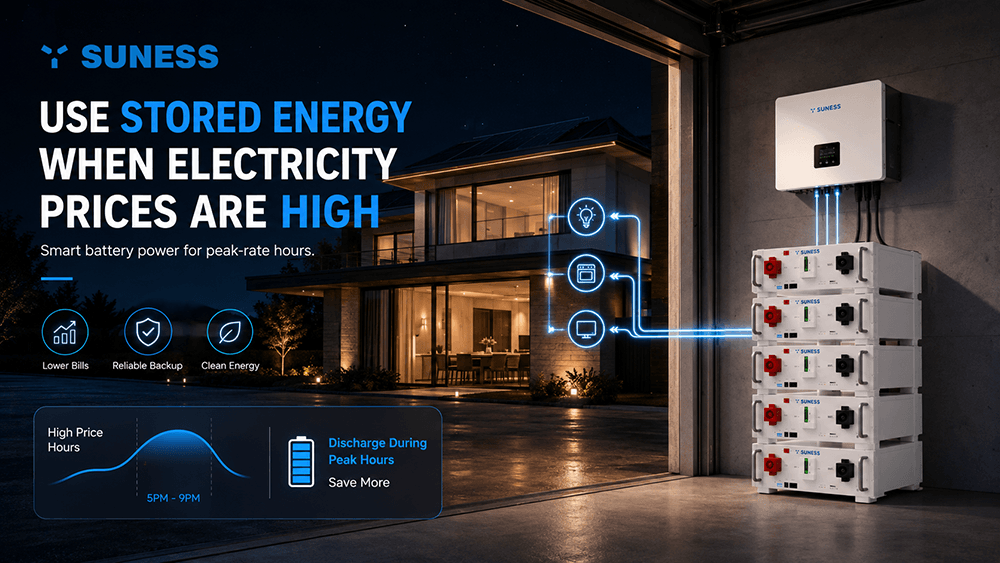
You want to reduce dependence on grid electricity during peak-rate periods.
You need more stored energy for backup during power interruptions.
For example, a home with an 8–10kW solar system may benefit from a 15kWh battery if daytime solar generation regularly exceeds household consumption and there is enough surplus energy to charge the larger battery.
Remember: A larger battery cannot create additional solar energy. If your solar panels cannot generate enough surplus electricity, a 15kWh battery may remain partially charged or underutilized.
Price is one of the most important considerations when purchasing a residential energy storage system.
In general, a 15kWh battery has a higher upfront price than a 10kWh battery because it contains more battery cells and provides greater storage capacity.
However, the cheapest initial purchase does not always deliver the best long-term value.
When comparing different battery capacities, consider the following costs:
| Cost Factor | What to Check |
|---|---|
| Battery price | Total price of the battery system |
| Inverter | Whether an inverter is included or purchased separately |
| Installation | Labor, wiring, protection devices, and commissioning |
| Mounting accessories | Wall brackets, floor stands, and other accessories |
| Electrical upgrades | Whether the distribution panel requires modification |
| Transportation | Shipping, handling, and delivery charges |
| Warranty | Warranty period and coverage conditions |
| After-sales service | Technical support and replacement arrangements |
An all-in-one ESS with an integrated inverter may reduce equipment complexity and simplify installation compared with purchasing separate components. However, the final cost still depends on the system design and installation requirements.
Homeowners and installers can consider several ways to improve the overall purchase value:
1. Look for Solar and Battery Package Deals
Some suppliers offer bundled pricing for solar panels, hybrid inverters, and battery storage systems. Purchasing a complete system may provide better overall value than buying each component separately.
2. Compare Different Battery Capacities
If your household only needs 8–9kWh of usable energy, purchasing a significantly larger battery may not be necessary. Compare the cost per usable kWh rather than looking only at the nominal capacity.
3. Check Seasonal Promotions and Distributor Discounts
Manufacturers and distributors may offer promotional pricing, installation packages, or volume-based discounts during specific sales periods.
4. Consider Local Incentives and Rebates
Some markets provide financial incentives for residential battery storage, solar installations, or participation in grid-support programs. Eligibility, incentive amounts, and application requirements vary by location and policy period.
5. Evaluate Long-Term Value
A reliable battery with suitable cycle life, an appropriate warranty, and accessible technical support may offer better long-term value than a lower-priced product with limited service coverage.
A 15kWh battery may be worth the additional investment if the extra capacity is regularly used to store surplus solar energy, cover evening consumption, or provide longer backup.
However, if your household has low electricity consumption and only needs basic backup, a 10kWh system may offer a better balance between cost and performance.
The best approach is to compare the additional purchase cost with the actual value of the extra usable energy.
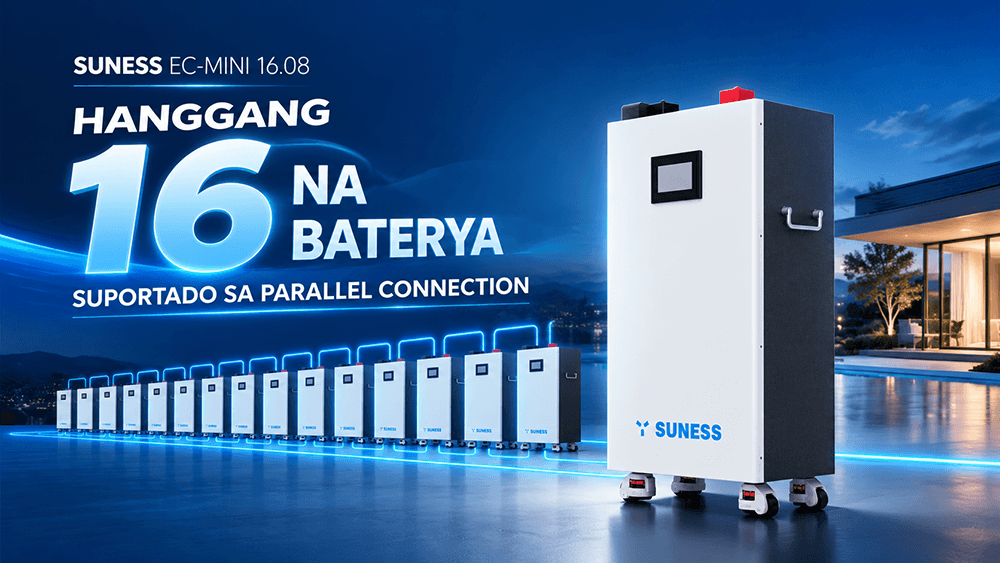
Installation space is another practical consideration, especially for homes with limited utility rooms, garages, or outdoor installation areas.
A 15kWh battery generally requires more battery cells than a 10kWh model. Depending on the product design, this may result in a larger enclosure, greater weight, or additional battery modules.
However, battery capacity does not directly determine physical dimensions. Different manufacturers use different cell formats, enclosure designs, and installation configurations.
Before purchasing a home battery, check:
Overall battery dimensions and weight.
Wall-mounted or floor-standing installation options.
Required mounting clearance and ventilation conditions.
Indoor or outdoor installation rating.
Operating temperature and humidity requirements.
Electrical connections and cable routing.
Accessibility for maintenance and inspection.
Local electrical and fire safety requirements.
Wall-Mounted Batteries
Can help save floor space.
Suitable for compatible walls and mounting conditions.
Require confirmation of wall load-bearing capacity.
May be convenient for garages and utility rooms.
Floor-Standing Batteries
Do not require wall mounting.
Can be suitable for heavier battery systems.
May offer more flexible placement options.
Require sufficient floor area and installation clearance.
If space is limited, compare the actual product dimensions rather than assuming that a 10kWh battery will always be smaller than a 15kWh battery.
One common mistake when selecting a home battery is focusing only on its kWh capacity.
Battery capacity and inverter output power are two different specifications.
Battery capacity (kWh): Determines how much energy can be stored.
Inverter output power (kW): Determines how much power can be supplied to household appliances at one time.
For example, a 15kWh battery paired with a 3kW inverter may store more energy than a 10kWh battery paired with a 5kW inverter, but the 3kW system may not be able to operate as many high-power appliances simultaneously.
Before purchasing a residential ESS, confirm:
Continuous AC output power.
Peak or surge output power.
Battery discharge current.
Single-phase or three-phase compatibility.
AC output voltage and frequency.
Hybrid inverter compatibility.
Grid-connected and off-grid operating modes.
A properly matched battery and inverter are essential for reliable household power supply.
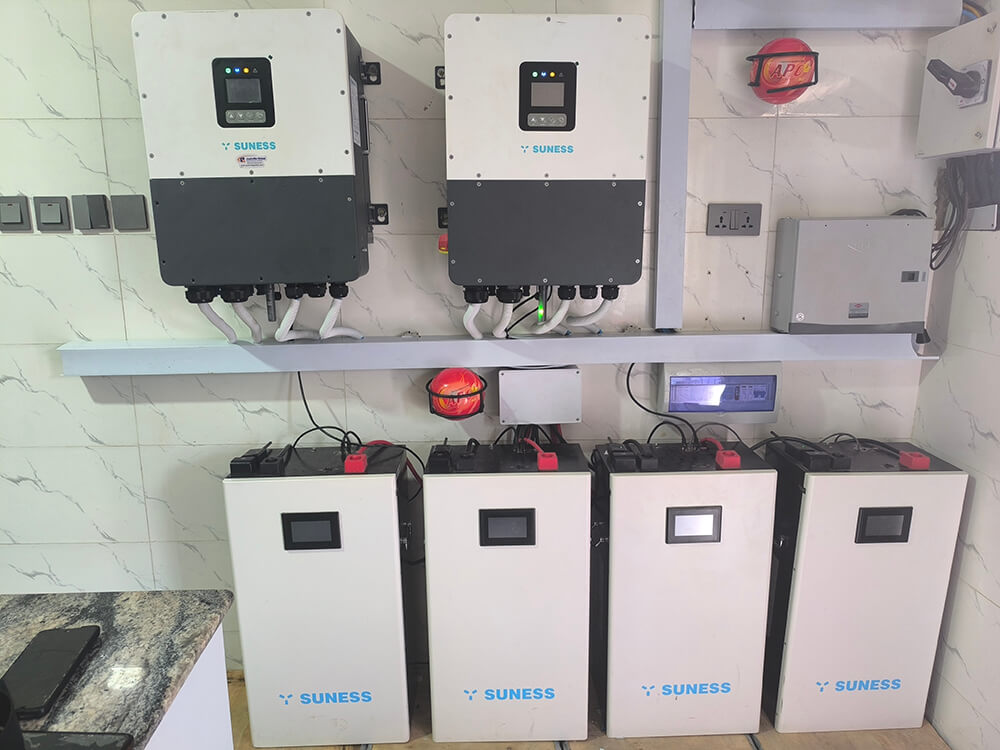
If you are uncertain about future household electricity demand, a modular battery system may provide greater flexibility.
Some residential energy storage systems allow users to add battery modules as electricity consumption increases.
This approach can help homeowners:
Reduce initial investment.
Expand storage capacity when needed.
Adapt to additional household appliances.
Prepare for future solar system upgrades.
Increase backup capacity over time.
However, not every battery can be expanded simply by connecting another battery.
Before choosing a modular system, confirm that the battery chemistry, voltage, BMS communication protocol, inverter compatibility, maximum supported capacity, and parallel connection requirements allow expansion.
It is also important to check whether the manufacturer permits adding new modules to an existing battery system after a period of operation.
The right choice depends on your household's energy consumption, solar generation, backup priorities, and budget.
| Your Household Situation | Recommended Starting Point |
|---|---|
| Moderate electricity consumption | 10kWh |
| Small household with essential backup needs | 10kWh |
| Moderate solar system and evening usage | 10kWh |
| Larger household with higher electricity demand | 15kWh |
| Larger solar system with regular surplus generation | 15kWh |
| Frequent power interruptions and longer backup requirements | 15kWh or more |
| Future plans for more electric appliances | Consider 15kWh or an expandable system |
| Limited budget and installation space | 10kWh |
Choose a 10kWh Home Battery If:
Your daily electricity consumption is moderate.
You mainly want to store surplus solar energy for evening use.
You need backup for essential household appliances.
You want to keep the initial investment lower.
Your available installation space is limited.
Your household consumes more electricity.
You have a larger solar panel system.
You regularly operate air conditioning or other high-energy appliances.
You need longer backup coverage.
You want additional capacity for future household energy demand.
Our recommendation: Start with your actual electricity consumption and backup requirements rather than choosing a battery based on capacity alone. A well-sized 10kWh system can be more cost-effective than an underutilized 15kWh system, while a 15kWh system can provide greater flexibility for homes with higher energy demand.
A 10kWh battery can support essential household appliances such as refrigerators, lights, routers, TVs, and selected electronics. Whether it can power an entire house depends on the home's electricity consumption, inverter output, and appliance usage.
Runtime depends on the average power consumption of connected appliances and the battery's usable capacity.
For example, if a system provides 13.5kWh of usable energy and the household consumes 1.5kW on average, the theoretical runtime is approximately 9 hours.
Actual runtime may be shorter due to conversion losses, reserve settings, and changing appliance loads.
Yes, if the battery inverter provides sufficient continuous and surge output power. However, air conditioners can consume substantial energy, especially when operating for long periods.
Check both the air conditioner's running power and starting requirements before choosing a battery system.
There is no fixed number of solar panels required for a 15kWh battery. The correct solar array size depends on panel wattage, daily sunlight hours, weather, household consumption, and charging requirements.
For example, a 10kW solar array may generate enough surplus energy to charge a 15kWh battery under favorable conditions, but actual results vary by location and season.
Not necessarily. A single 15kWh battery may simplify installation, while two 5kWh batteries may provide modular flexibility.
Compare usable capacity, inverter compatibility, total system cost, installation requirements, warranty, and expansion options.
LiFePO4 (Lithium Iron Phosphate) batteries are widely used in residential energy storage because of their thermal stability, cycle-life characteristics, and suitability for repeated charge and discharge operations.
When comparing products, check the manufacturer's cycle-life test conditions, usable capacity, BMS protection, certifications, and warranty terms.
If your electricity consumption is likely to increase, a modular system may allow you to start with a smaller capacity and expand later. However, expansion compatibility should be confirmed before the initial installation.
Both 10kWh and 15kWh home battery systems can provide reliable residential energy storage when properly designed.
A 10kWh battery is a practical choice for households with moderate energy consumption, limited backup requirements, and a tighter budget.
A 15kWh battery is more suitable for homes with higher electricity demand, larger solar installations, or a greater need for backup energy.
Before making a decision, evaluate your daily electricity consumption, solar panel capacity, essential appliance loads, inverter power, available installation space, and total system cost.
The goal is not simply to install a larger battery. It is to build a residential solar energy storage system that matches your household's needs and delivers long-term value.
Looking for a reliable residential energy storage solution?
SUNESS provides LiFePO4 battery storage solutions for residential solar applications. Contact our team to discuss battery capacity, inverter compatibility, and suitable energy storage configurations for your market.
Website: https://www.suness.com/
Email: info.CN@youess.com
Leave Your Message
Enterprise Core Values
Passion,Strive,Pragmatism,Promising
Corporate Vision
To become a global leader in smart energy storage
Corporate mission
Let clean energy enter thousands of households